
METALS AND NON METALS
- Differentiate
- Examples
- Uses
02 Sep 2025
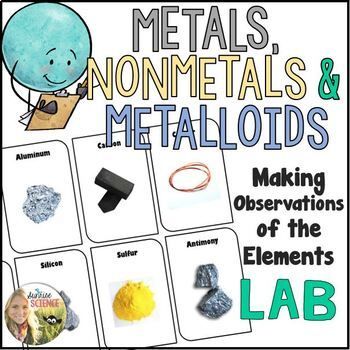
Metals and Non-metals” introduces students to the fundamental physical and chemical differences between these two broad categories of elements, including their appearance, hardness, conductivity, malleability, ductility, and behavior when reacting with oxygen and water, as well as their diverse applications in daily life. Key distinctions are that metals are typically hard, lustrous, malleable, ductile, and good conductors, while non-metals are often dull, brittle, and poor conductors
Related Blogs

Colonial India was the part of the Indian subcontinent that was occupied by European colonial powers during and after the Age of Discovery.

| Sl No | The activity series of some common metals |
|---|---|
| 1 | K - Potassium |
| 2 | Ca - Calcium |
| 3 | Na - Sodium |
| 4 | Mg - Magnesium |
| 5 | Al - Aluminium |
| 6 | Zn - Zinc |
Metals:-
- They are lustrous
- They are hard
- They are malleable
- They are sonorous
- They are ductile
- They are good conductors of heat & electricity
Eg:- Iron, Copper, aluminium
Non Metals
- They are dull in appearence
- They are not very hard
- They are not mettable
- The are not ductile
- They are not sonorous
- They are the conductors of heat & electricity
Eg:- Carbon, Sulphur, Phosphorus
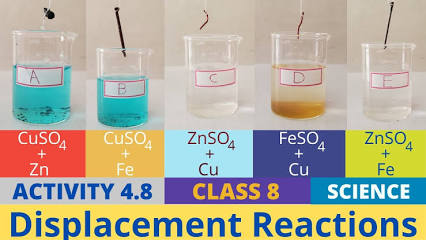
Displacement reactions are those where a more reactive element replaces a less reactive element from its compound. For metals, this means a highly reactive metal displaces a less reactive metal from its salt solution, like zinc displacing copper from copper sulfate. While non-metals also undergo displacement, the principle remains the same: a more reactive non-metal can displace a less reactive non-metal.
Key Points
- Metals displace metals: A metal can only displace another metal, not a non-metal, and vice versa.
- Reactivity is key: The more reactive element must be present to initiate the displacement.
- 1. Reactivity Series:
Elements are arranged in a reactivity series based on their reactivity.
- 2. Displacement:
An element higher in the series can displace an element lower in the series from its compound.
- 3. Example:
Zinc (Zn) is more reactive than copper (Cu). When zinc reacts with copper sulfate (CuSO₄), it displaces copper, forming zinc sulfate (ZnSO₄) and copper metal.
- Equation: Zn(s) + CuSO₄(aq) → ZnSO₄(aq) + Cu(s)
- Equation: Zn(s) + CuSO₄(aq) → ZnSO₄(aq) + Cu(s)
- 4. No Reaction:
If a less reactive element is used, no displacement reaction will occur. For instance, if iron is placed in magnesium sulfate (MgSO₄), no reaction takes place because iron is less reactive than magnesium.
Key Points
- Metals displace metals: A metal can only displace another metal, not a non-metal, and vice versa.
- Reactivity is key: The more reactive element must be present to initiate the displacement.